Service Designer | E-Commerce, Retail
Designing a Streamlined Customer Experience
A systems overhaul for French Florist’s first franchise conversion
50% reduction in customer resolution time
Team Breakdown
Background
What is French Florist?
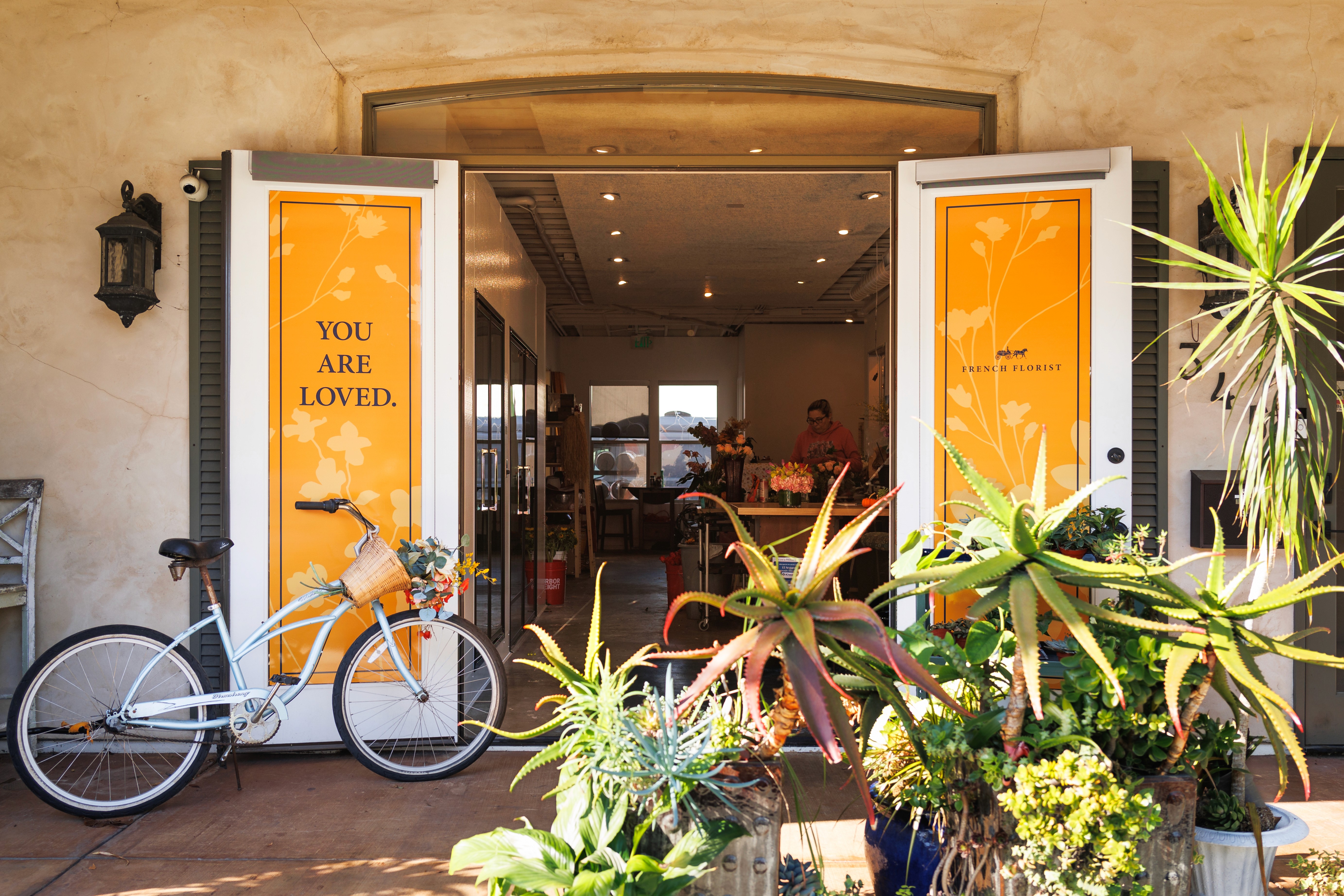
In March 2025, I was contracted to identify and improve operational inefficiencies during the conversion of a local El Segundo flower shop into the French Florist franchise system. This was the first franchise conversion of French Florist, rather than a ground-up build.
This shop had:
Existing staff workflows
Informal, verbal communication patterns
No fully integrated digital ordering infrastructure
Challenge
Existing operational systems snowballed into major pain points
The existing ordering and operations systems in place at the time did not effectively support:
Walk-in and phone orders outside the French Florist website
Multi-shift Customer Service Representatives (CSR) workflows
High-volume seasonal demand (Mother’s Day, Valentine’s Day)
More staffing (1–2 CSRs at a time)
Accurate handoff between CSRs and floral designers
Additionally, French Florist corporate training materials assumed the presence of integrated systems and equipment that did not exist at this location, leading to friction between “ideal” workflows and real-world execution. Over time, these small mismatches accumulated, increasing the risk of errors, rework, and customer-facing issues during already time-sensitive and emotionally charged transactions.
Opportunity
Introducing structure without slowing service
There was an opportunity to introduce greater consistency into the fast-paced retail system operating with limited staffing and incomplete tooling. The goal was not to slow down service or introduce new systems for the sake of change , but to reduce variability and friction on how orders, information, and handoffs were handled during active customer interactions.
Update Ordering System
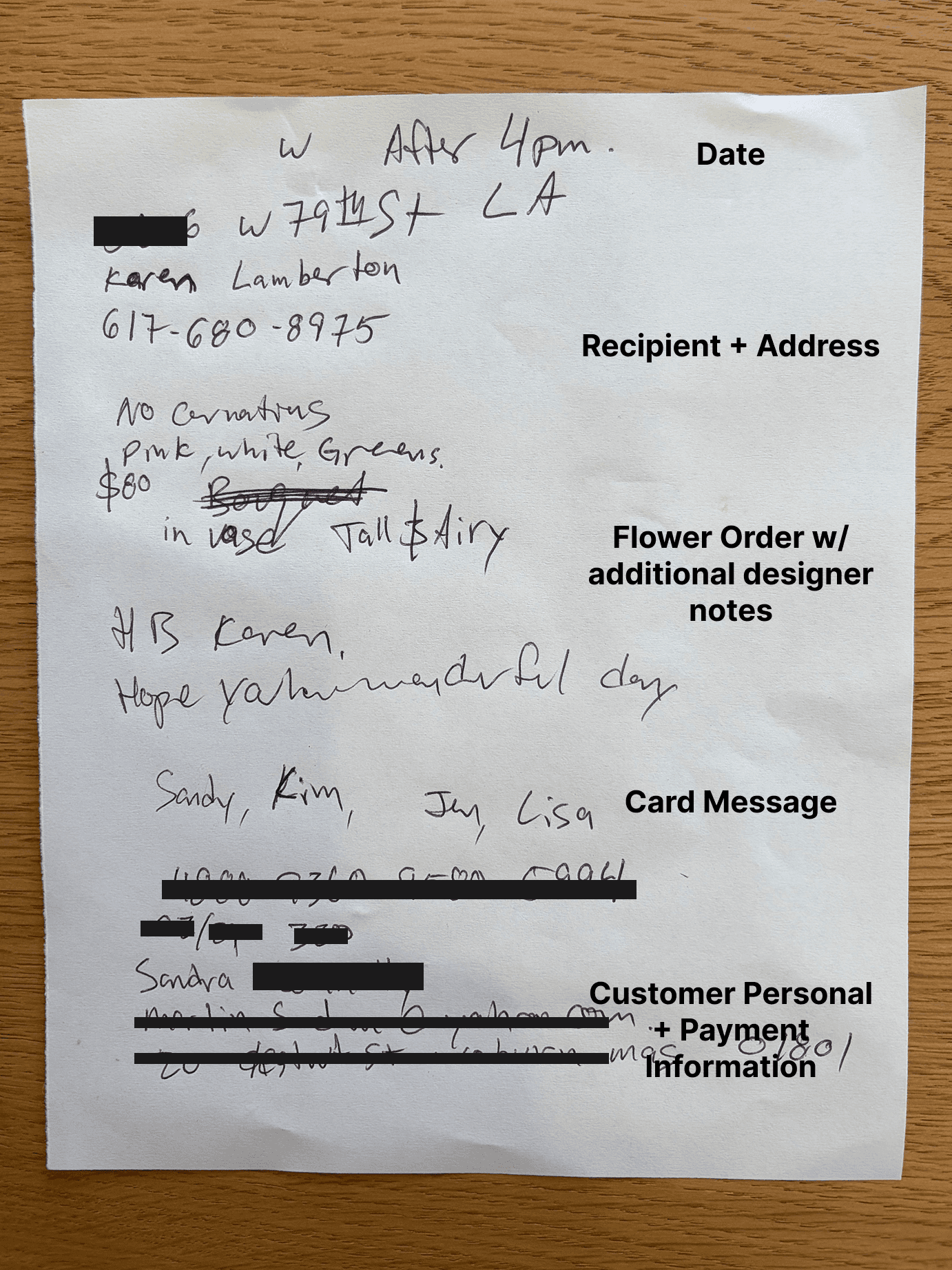
The ongoing method of taking orders consisted of shorthand, illegible writing without much structure that caused common problems in transitions.
A Flawed Internal System

The integrated admin system while feature-rich, suffered from fatal user errors such as orders being erased prolonging customer ordering times.
Efficient Customer Ordering
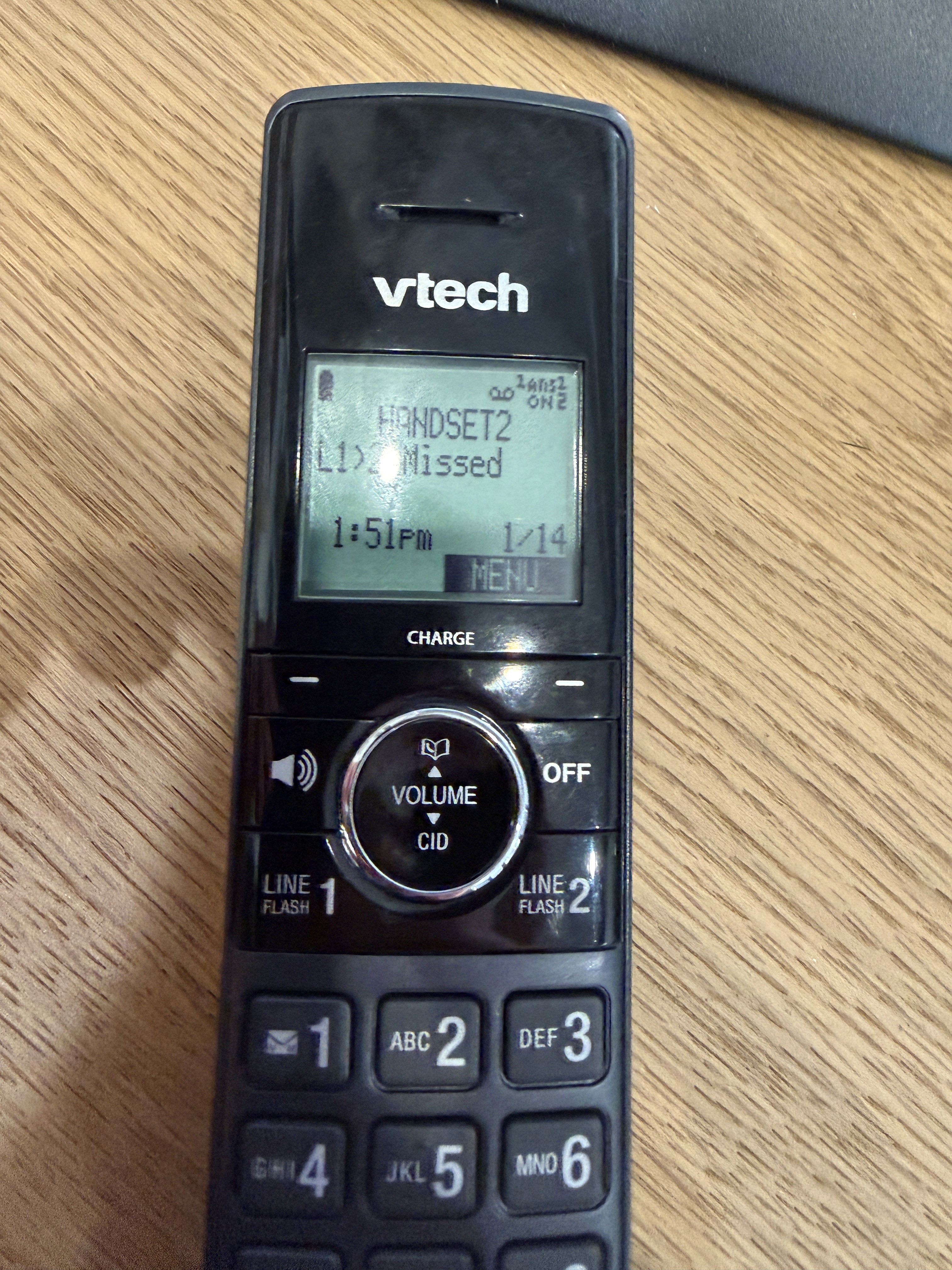
A subpar, inefficient ordering system repeatedly resulted in long customer interactions and missed customer conversion opportunities.
Improve Customer Outreach
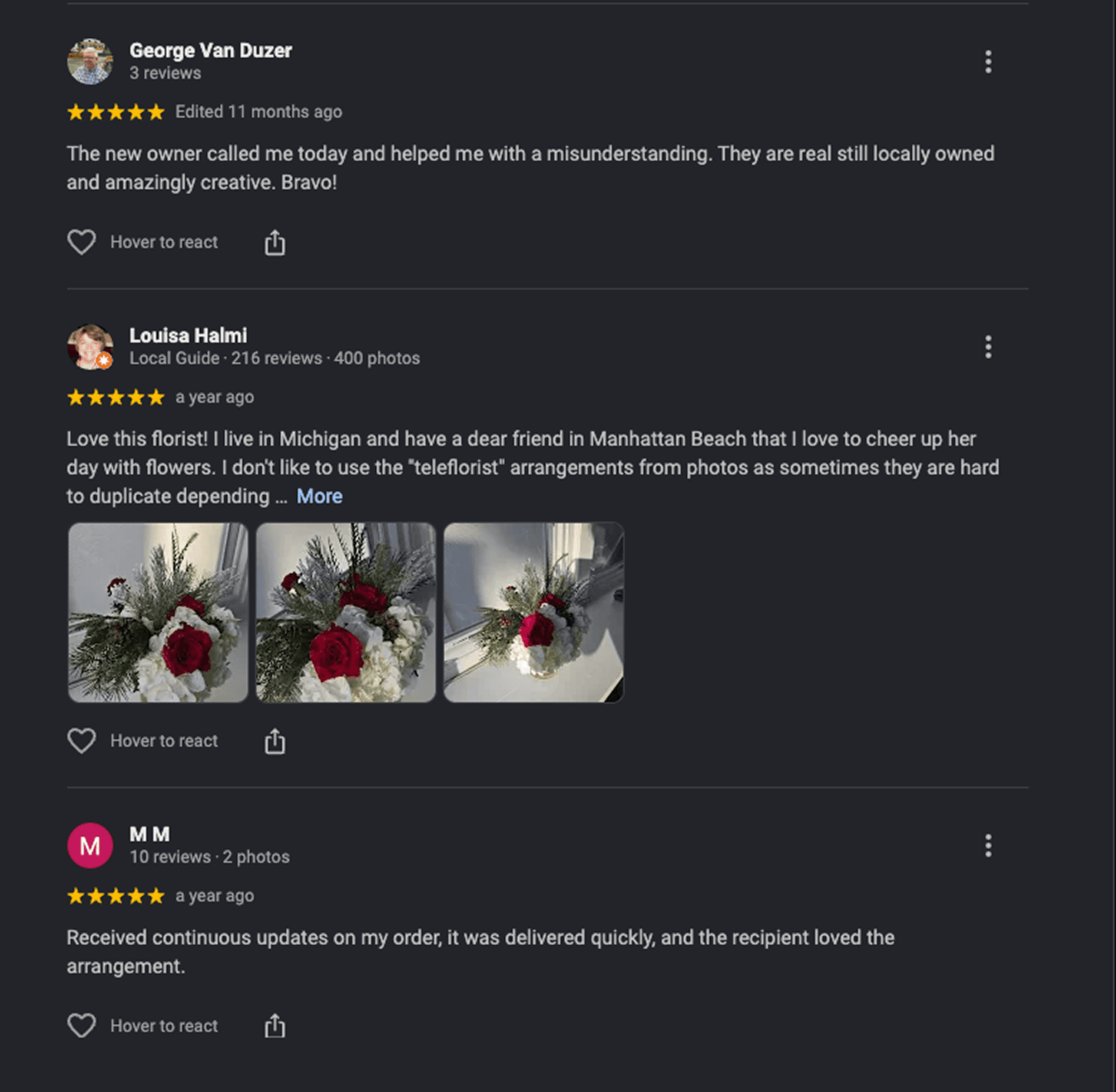
While positive reviews of the existing product trickled in from time to time, there was notable stagnant growth in online presence regarding service.
Solution
We enhanced systems to maximize usability and expedite ordering
By overhauling core user experiences, we improved the user (admin and customer facing) satisfaction drastically. Some critical flows included:
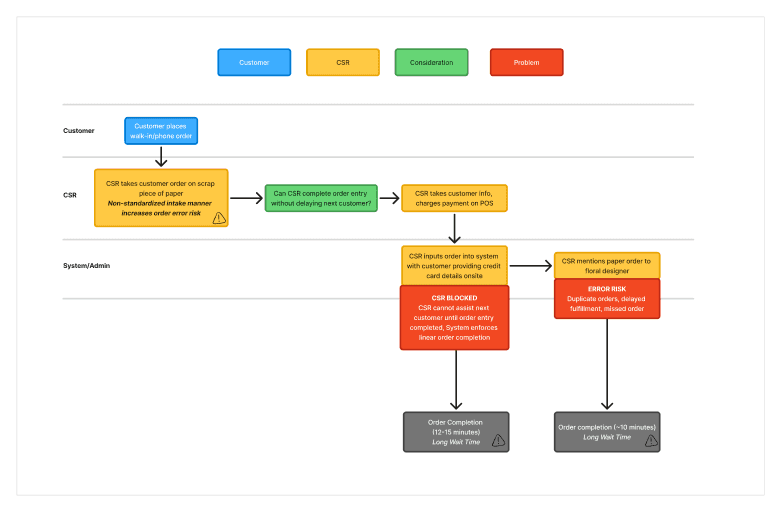
Walk-In Order Workaround (System Hack)
CSRs had only two options for walk-ins:
Passing a paper order via shorthand passed to designers (high error rate, no digital record)
Full phone-order admin system entry (navigating around pain points) while customer waited
Unfortunately this method didn't allow us to leverage the online digital system efficiently. Missed conversations vs time to enter order.
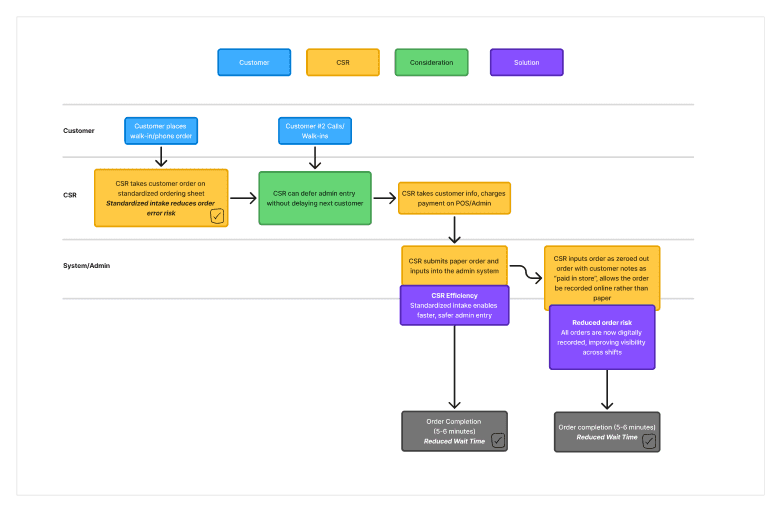
We introduced a third workflow:
Charging the customer in store then provided additonal information in internal admin notes.
This involved entering an order as "Paid in Store" in the internal digital system, noted into admin notes which allowed order tracking
This resulted in a few things:
Significantly faster conversions times
Reduced custom abandonment during busy periods (common cited pain point)
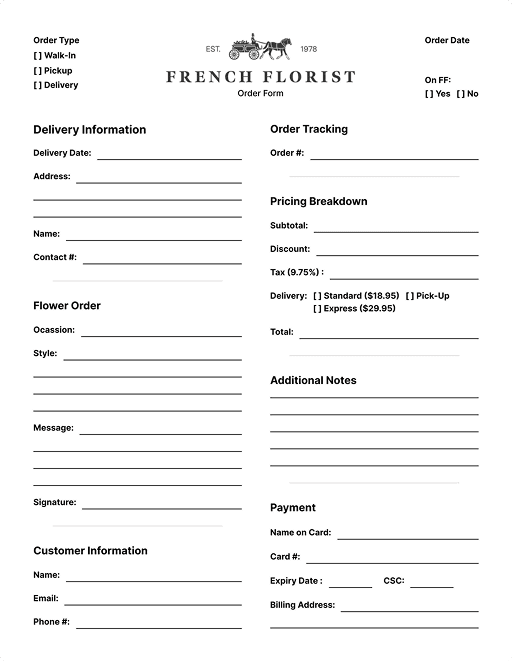
The In-Person and Phone Ordering Process
We created a standardized physical order form for phone and in-person orders supplementing the new workflow. This order form was created to:
Capture all required information up front
Allow edits without restarting the order, a major internal admin system issue
Reduce reliance on memory and shorthand resulting in many order errors
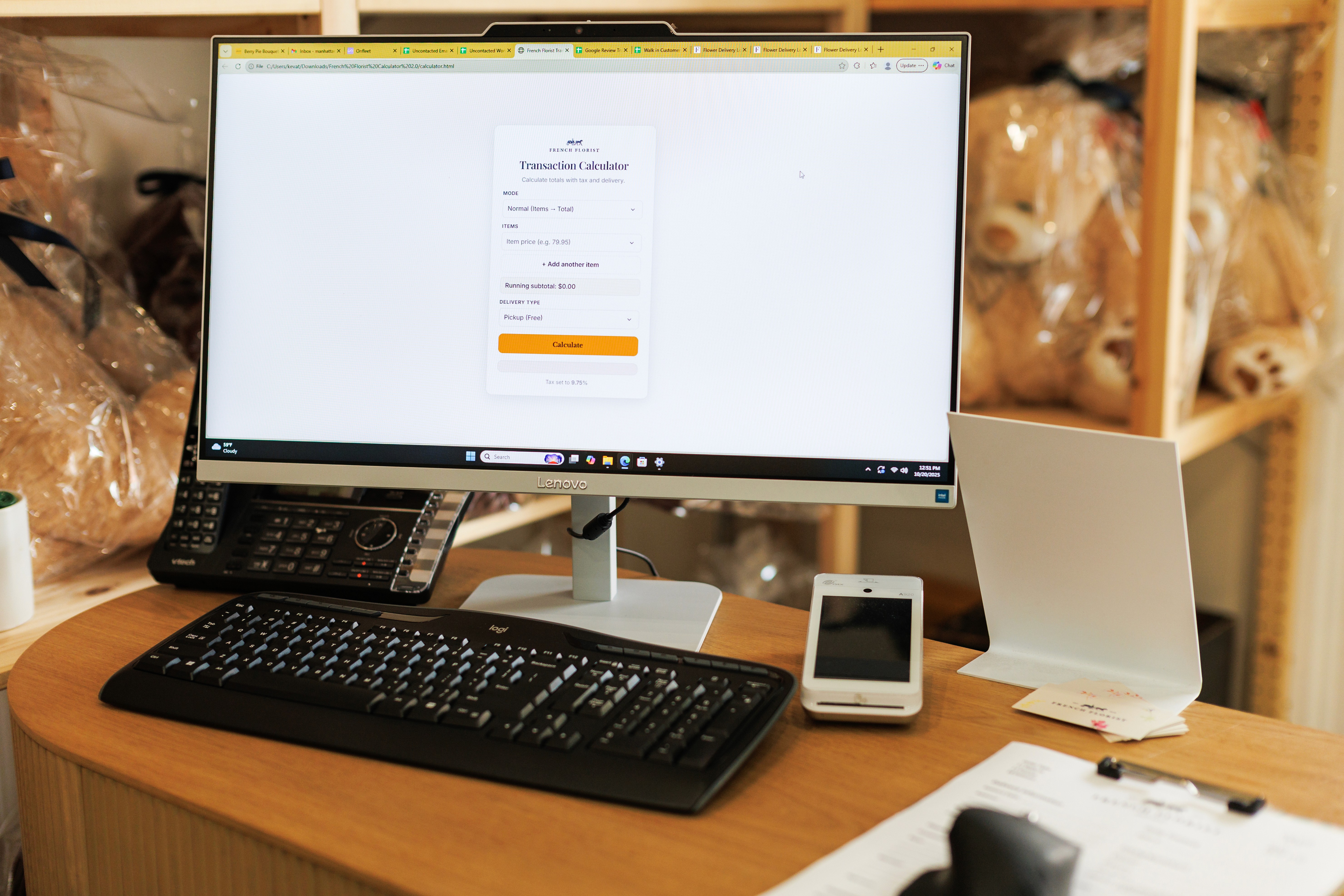
The Expedited Customer Interaction
Another supplement to the workflow was a custom built a calculator tool specifically for CSR's allowing them to:
Quickly quote customers, without over committing information
Work from a starting price (commonly requested by customers working with fixed budget, maximizing revenue)
Expedite in person/phone customer ordering
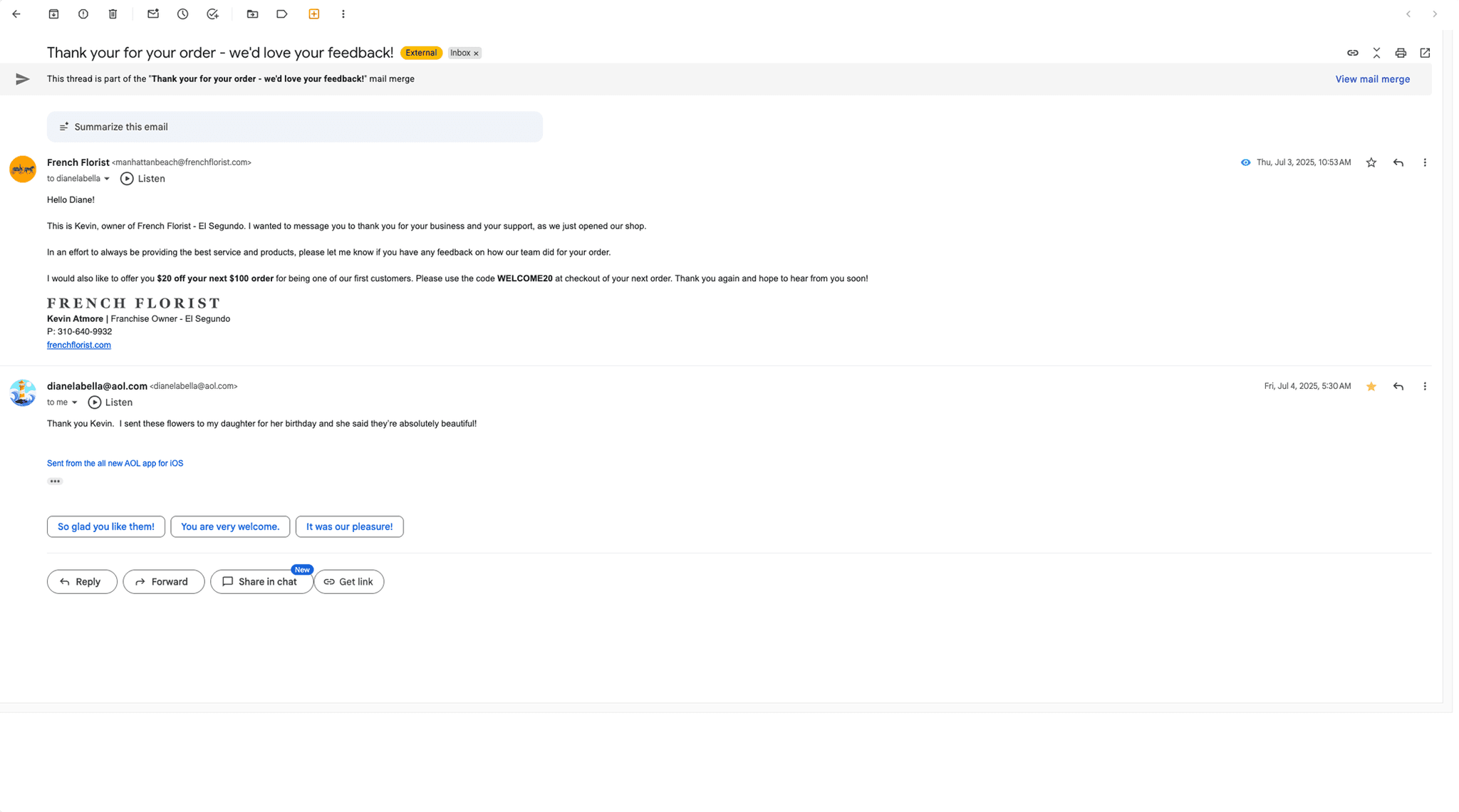
Customer Review Email
A targeted post-purchase email prompting reviews concluded the new workflow process which included:
Clear CTA
Optimized messaging based on customer feedback
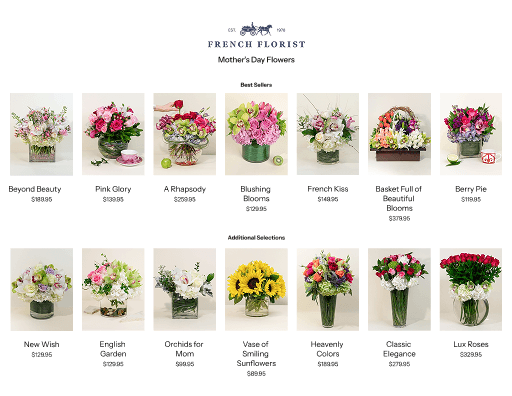
Seasonal Menus
To combat busier seasons, the system scaled with adding reference menus for longer wait times. These menus allowed:
Aligned pricing, availability, and expectations for the customer
Reduced improvisation during peak volume for CSR
More efficient customer interaction times
Impact
Reducing friction at the point of order
Following the introduction and iteration of the standardized ordering process, customer service interactions became more structured and predictable during phone and walk-in orders.
In practice, this reduced the amount of clarification required during order intake, lowered cognitive load for CSRs, and improved consistency across staff when handling similar customer requests. Orders could be captured and adjusted more efficiently without restarting the process, particularly during busy periods and shift changes.
A Seamless Ordering System
Reduced ordering time by more than 50%
Fewer clarification questions
Lower CSR cognitive load
Improved consistency across staff
Before: 12–15 minutes per phone or walk-in order
After: 3–6 minutes for similar orders
Measured by timing comparable customer interactions:
new customer
off-site delivery
card + message
standard arrangement
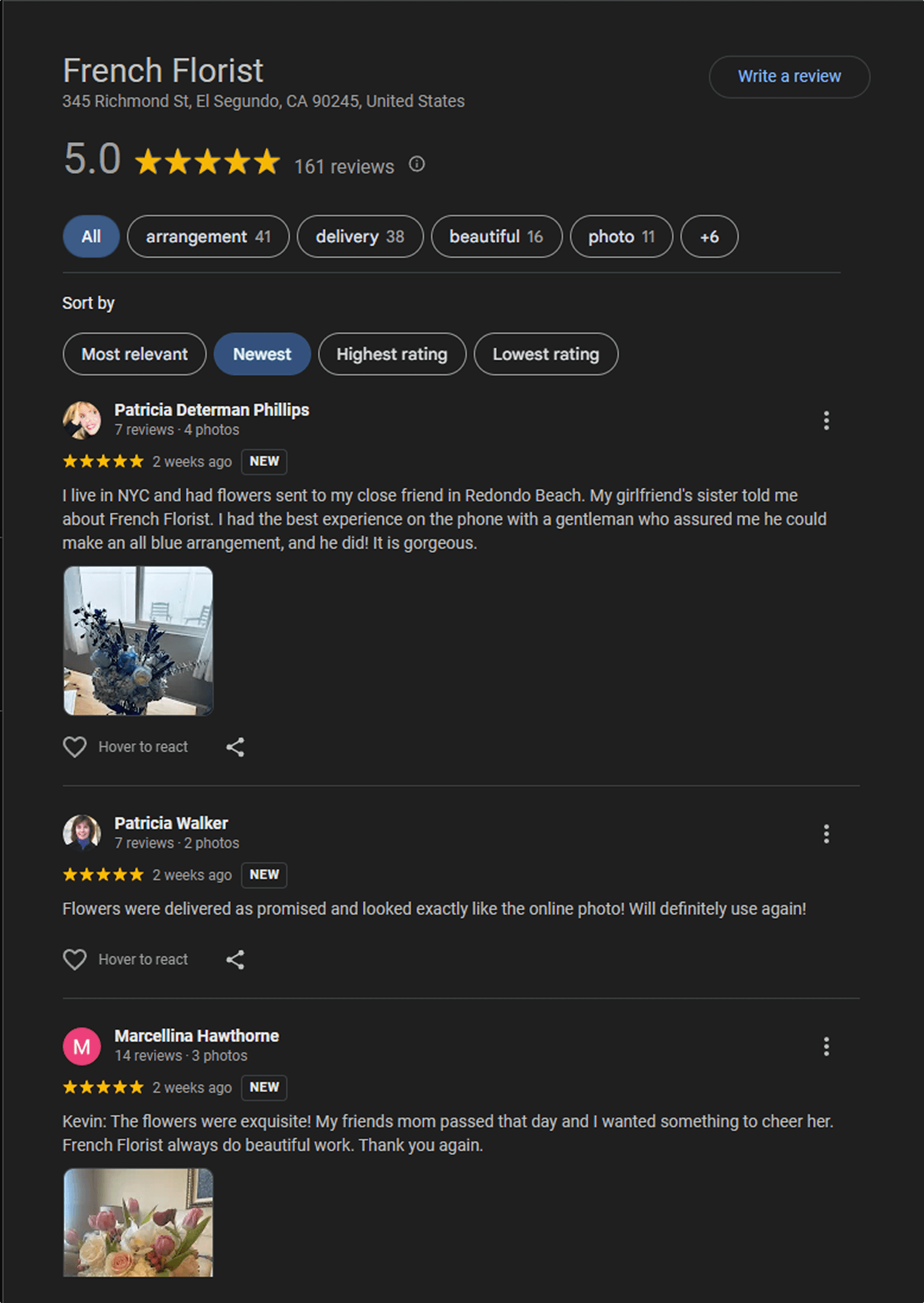
Consistent Customer Outreach Grow
Sustained weekly review growth, 100 -> 160 reviews
Improved visibility and community trust
Direct correlation with inbound customer calls
Want to learn more?
Feel free to reach out to get an in-depth look into the process.
william.i.avelar@gmail.com